

Kim Kardashian: Real-Life Examples of The 48 Laws of Power in Action
Kim Kardashian’s rise is often described as accidental or purely luck-driven, but a closer look reveals a pattern of strategic behavior that aligns closely with the principles outlined in The 48 Laws of Power, the famous book by Robert Greene. While Kim has never publicly stated that she follows the book, her career offers multiple real-life examples of how these laws manifest in modern celebrity, business, and media culture.

Unlike historical figures who gained power through conquest or politics, Kim Kardashian operates in the attention economy. Her influence is built on perception, timing, and emotional control—exactly the forces Robert Greene dissects in The 48 Laws of Power. This article explores concrete examples from Kim Kardashian’s career that reflect specific laws from the book, without speculation or exaggeration.
Example 1: Turning Visibility into Power (Law 6 – Court Attention at All Costs)
One of the clearest examples of The 48 Laws of Power in Kim Kardashian’s life is Law 6: Court attention at all costs. From reality television to social media dominance, Kim consistently transforms attention into leverage.
Early in her career, critics dismissed her fame as fleeting. Instead of withdrawing, Kim leaned into visibility. Reality TV appearances, magazine covers, social media updates, and high-profile relationships kept her name in constant circulation. Importantly, she rarely disappeared from public view for long periods.
Robert Greene emphasizes that power fades when attention disappears. Kim’s understanding of this principle is evident in how she maintains relevance even during quiet phases—through calculated appearances, product launches, or digital storytelling.
Example 2: Strategic Use of Controversy (Law 9 – Win Through Actions, Never Through Argument)
Kim Kardashian rarely engages in long public arguments to defend herself. Instead, she lets results speak. This aligns with Law 9 from The 48 Laws of Power: Win through your actions, never through argument.
When critics questioned her intelligence or business skills, she did not attempt to convince them verbally. Instead, she launched successful brands such as KKW Beauty and SKIMS, allowing measurable success to silence doubt.
By avoiding defensive debates, Kim preserves authority. Greene notes that arguments often reveal weakness, while outcomes create undeniable proof of power.
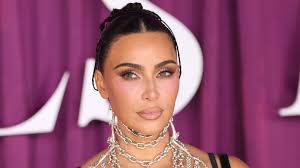
Example 3: Reputation Management Over Time (Law 5 – Guard Your Reputation)
Law 5 states that reputation is the cornerstone of power. Kim Kardashian offers a strong modern example of reputation evolution rather than reputation defense.
At different stages of her career, Kim repositioned herself—from reality TV personality to entrepreneur and later to social justice advocate. Each shift addressed public perception while expanding her influence.
Rather than attempting to erase past criticism, Kim reframed her image through consistent actions. This reflects Greene’s insight that reputation can be reshaped if managed deliberately and patiently.
Example 4: Self-Reinvention as a Survival Strategy (Law 25 – Re-Create Yourself)
Few celebrities demonstrate Law 25 as clearly as Kim Kardashian. Re-creating oneself is a recurring theme in The 48 Laws of Power, and Kim’s career is built on controlled reinvention.
She adapted her style, business focus, and public persona as cultural trends evolved. Instead of clinging to one version of fame, she anticipated shifts in audience expectations.
Robert Greene warns that fixed identities lead to irrelevance. Kim’s ability to transform without alienating her audience highlights the practical value of this law in the digital age.
Example 5: Emotional Influence Over the Audience (Law 27 – Play on People’s Need to Believe)
Kim Kardashian excels at creating emotional narratives. Whether through reality TV storylines or social media storytelling, she invites audiences into her personal world.
Law 27 explains that people seek figures they can emotionally invest in. Kim provides relatability, vulnerability, and continuity—elements that foster loyalty.
This emotional trust becomes power when translated into business. Product launches succeed not solely due to quality, but because followers feel connected to her journey.
Example 6: Controlling the Narrative Through Silence (Law 4 – Always Say Less Than Necessary)
Another recurring pattern in Kim Kardashian’s behavior reflects Law 4: Always say less than necessary. During controversies, she often limits her statements or delays responses.
This silence allows public discourse to unfold without her escalating the situation. In many cases, attention fades before lasting damage occurs.
Greene notes that restraint creates mystery and authority. Kim’s selective communication reinforces her control over narratives rather than surrendering it to reactive commentary.
Example 7: Acting Like Power Before Having It (Law 34 – Act Like a King to Be Treated Like One)
Kim Kardashian consistently projects confidence, luxury, and authority. This aligns with Law 34, which states that self-perception influences how others treat you.
Through fashion, branding, and partnerships, Kim positions herself alongside elite figures and institutions. This presentation is not accidental—it reinforces her status and bargaining power.
In The 48 Laws of Power, perception is often more influential than factual hierarchy. Kim’s self-positioning ensures she is treated as a top-tier figure in every industry she enters.
Example 8: Flexibility in a Rapidly Changing World (Law 48 – Assume Formlessness)
Law 48 is one of the most advanced principles in Robert Greene’s book. It teaches adaptability and resistance to rigid identity. Kim Kardashian’s career reflects this law repeatedly.
She shifts roles seamlessly: influencer, business executive, media personality, and advocate. This fluidity prevents competitors or critics from boxing her into a single category.
In the digital era, where trends change rapidly, this formlessness protects long-term influence.
Example 9: Avoiding Direct Enemies (Law 19 – Know Who You’re Dealing With)
Kim Kardashian generally avoids creating long-term public enemies. Rather than escalating conflicts, she minimizes engagement or redirects focus.
Law 19 warns against offending the wrong people unnecessarily. Kim’s neutral tone and selective alliances reduce risk while maintaining strategic relationships across industries.
This cautious approach helps preserve power without visible confrontation.
Why Kim Kardashian Is a Modern Power Case Study
Kim Kardashian represents a modern interpretation of power—one that operates through media, psychology, and branding rather than force or authority.
Her actions illustrate that The 48 Laws of Power are not limited to historical rulers or corporate leaders. They apply equally to digital influence, celebrity culture, and personal branding.
The consistency of these patterns suggests intuitive mastery rather than coincidence.
Key Takeaways from Kim Kardashian’s Power Strategy
- Attention can be converted into long-term influence
- Reputation must evolve with changing public expectations
- Reinvention is essential for survival in competitive spaces
- Emotional connection strengthens authority
- Silence and restraint often outperform confrontation
- Flexibility protects power in unstable environments
The 48 Laws of Power by Robert Greene remains relevant because it explains how human behavior responds to influence, perception, and control. Kim Kardashian’s career provides clear, observable examples of these principles operating in a modern setting.
Even without explicitly following the book, her decisions align with its core ideas. Kim Kardashian’s journey shows that power today is less about domination and more about awareness, adaptability, and narrative mastery.
In the digital age, her success stands as a real-life demonstration of how the laws of power continue to shape outcomes—often quietly, strategically, and effectively.
